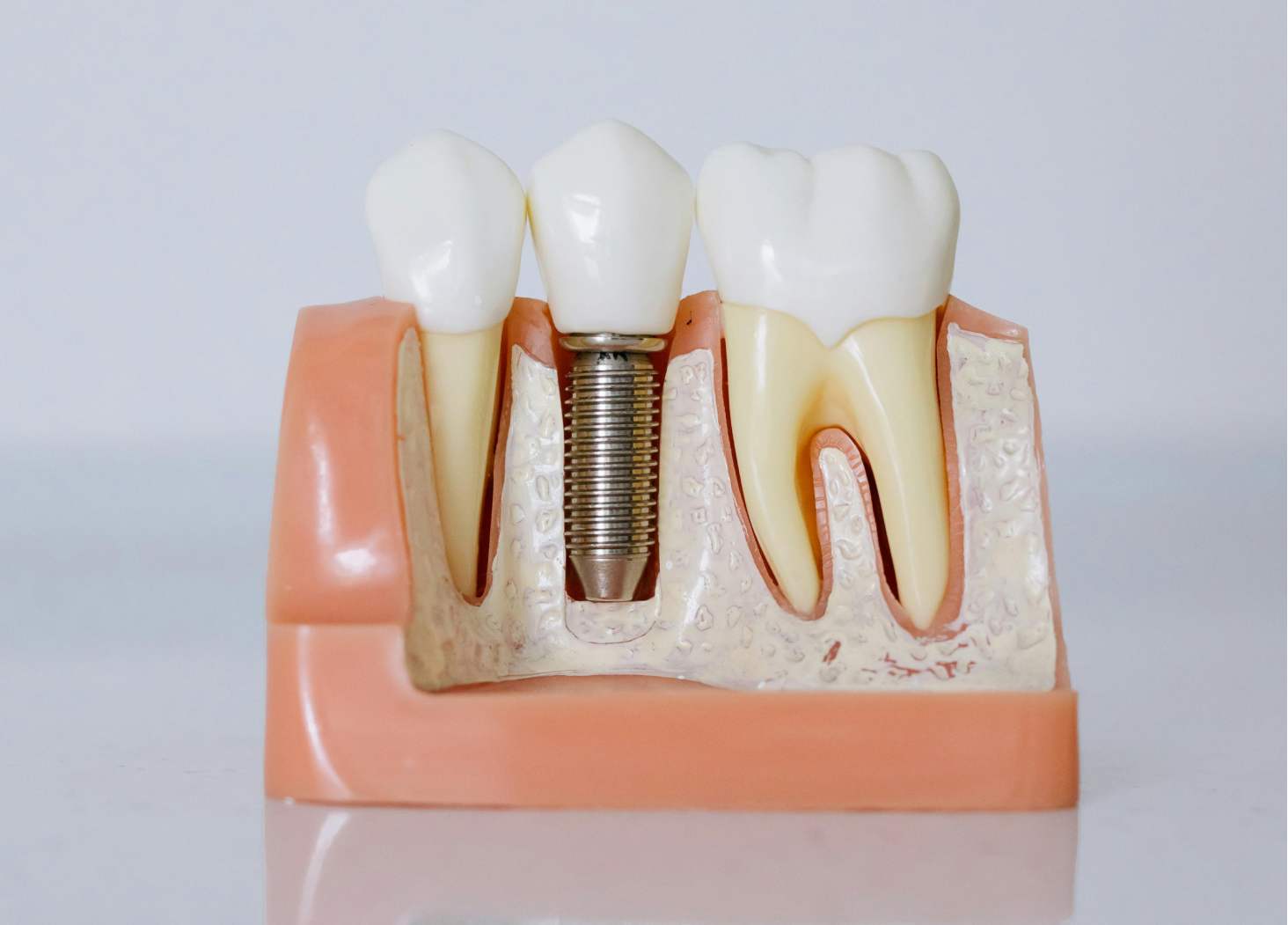
A modern, long-term solution for replacing missing teeth.

Implants are one way of replacing missing teeth. It is a titanium screw that can replace the root of a tooth when it fails, and just like a tooth root, it is placed into the jawbone. Implants can also be used to support fixed bridges or dentures. Dental implants serve as long-term solutions for replacing missing teeth, if properly maintained and looked after using our recommended daily oral habits and hygiene practices.
Implant treatment normally has two stages. First, the implant is placed in the jaw. Then, when the jaw has healed, replacement teeth are attached to the implant.
Patients with gappy or crooked teeth are ideal candidates for dental implants as one of the most common and popular treatments for replacing missing teeth. When you visit us for your initial consultation, we will first examine the structure of your mouth and bone density to decide whether or not bone augmentation treatment will be necessary before going ahead with dental implants.
Placement is usually carried out under local anaesthesia, which will eliminate all discomfort. After the surgery, there will be some discomfort, swelling and bruising, which is normally controlled with over-the-counter medication. It’s highly likely that we will need you to visit our practice two times to complete the full treatment, the first being to fit the implant and then a follow-up appointment to fit the new tooth into the implant. Here at Everyday Dental, we are very flexible with our appointments and always try our best to cater to your busy schedule and requirements.
Dental implants are used to replace missing teeth and restore your smile to its best. In the implant itself, there will not be any feeling of such, but you may sense tingling in the gum areas where the dental implant has been placed. Dental implants are designed to be implanted like normal teeth, but it may take between 1-2 weeks after the treatment before this is the case.